
What Are the Rituals of the Tibetan Buddhist? A Deep Dive into Sacred Practices

Tibetan Buddhist rituals, steeped in centuries of tradition, captivate spiritual seekers with their vibrant ceremonies and profound symbolism, but what are the rituals of the Tibetan Buddhist? These rituals encompass a rich array of practices, including chanting mantras, making offerings, spinning prayer wheels, performing prostrations, ritual dances, and sky funerals, all aimed at purifying karma, cultivating wisdom, and advancing on the path to enlightenment. Rooted in the teachings of the Buddha and shaped by Indian and Chinese Buddhism, these practices reflect the religiou beliefs of Tibetans and their commitment to the Bodhisattva ideal. This article explores the diverse rituals of Tibetan Buddhism, focusing on their significance, execution, and the holy ritual items like prayer wheels that enhance these practices. Tailored for a U.S. audience, it offers a comprehensive guide for people intrigued by Tibetan culture, the Nyingma and Gelug schools, and the transformative power of Buddhist meditation. Dive in to discover how these rituals, guided by figures like the Dalai Lama, can inspire your spiritual journey and connect you to the heart of Buddhism in Tibet.
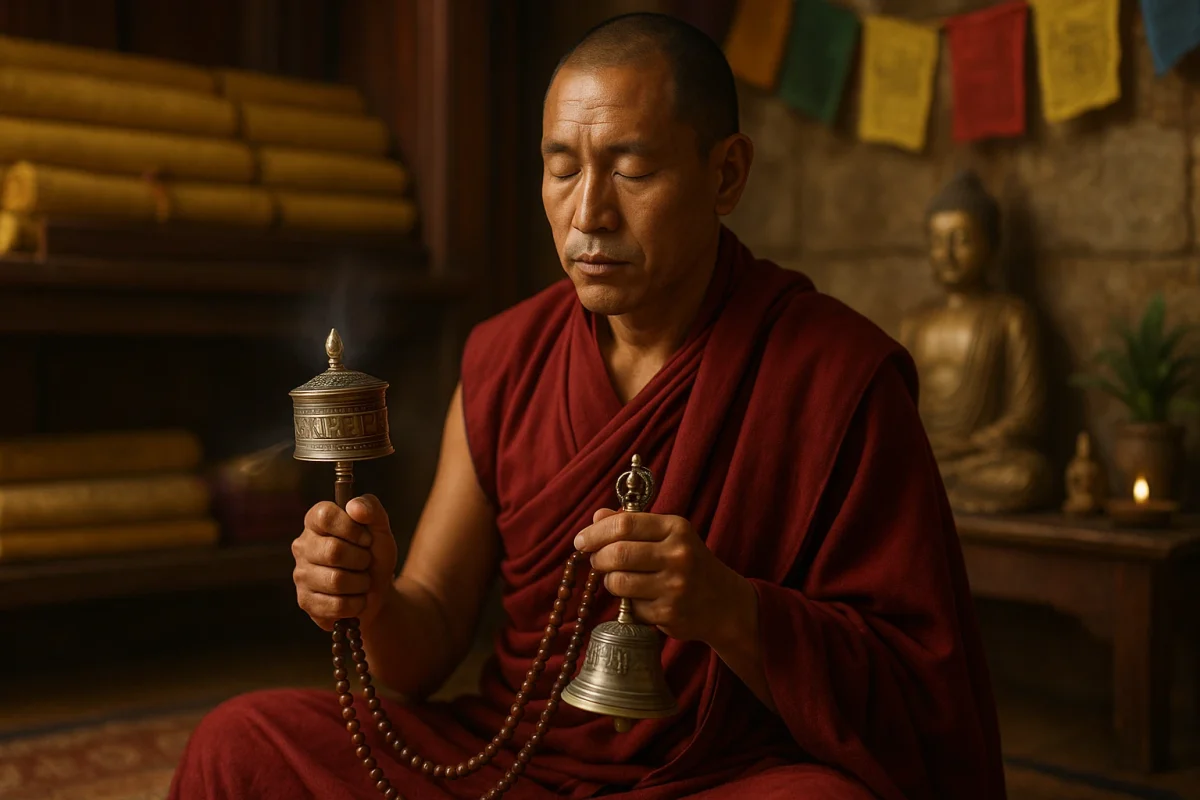
The Ritual of Prayer Wheels in Tibetan Buddhism
The Tibetan prayer wheel, a hallmark of Tibetan Buddhist rituals, is a handcrafted cylindrical device, often made of metal, brass, or stone, inscribed with the sacred mantra “Om Mani Padme Hum.” Spun clockwise, it releases prayers into the environment, believed to be equivalent to chanting them aloud, thus purifying negative karma and spreading blessings across Central Asia and beyond. This practice, rooted in the 8th century teachings of Indian Buddhist scholar Nagarjuna, is a common ritual performed by monks, nuns, and laypeople in monasteries and homes. Handheld prayer wheels, popular among Tibetan Buddhists, are carried during circumambulation around temples or stupas, while larger wheels at sacred sites may be powered by water, amplifying their merit-generating potential. The act of spinning a wheel, as taught by tantric practitioners like Padmasambhava, aids in focusing the mind and cultivating compassion, aligning with the Bodhisattva ideal of benefiting all sentient beings. This ritual, central to Tibetan culture, symbolizes the Wheel of Dharma, making it a powerful tool for spiritual growth and effective in fostering peace, as pilgrims have practiced for centuries.
Chanting Mantras for Spiritual Transformation
Chanting mantras is a cornerstone of Tibetan Buddhist ritual, designed to transform the mind and purify karma. The most prevalent mantra, “Om Mani Padme Hum,” invokes Chenrezig, the Bodhisattva of Compassion, and is chanted during meditation, circumambulation, or while spinning prayer wheels. Monks and nuns in monasteries, such as those in the Gelug school, perform elaborate chanting ceremonies, often accompanied by musical instruments like the prayer bell, Tibetan drum, and conch, to create a sacred sound that resonates with the heart. According to the BBC’s overview of Tibetan Buddhism, these rituals involve reciting Buddhist texts, known as sutras, to overcome obstacles and cultivate wisdom (BBC Religion: Tibetan Buddhism). Laypeople use mala beads, crafted from bodhi seeds or precious stones, to count mantra repetitions, ensuring focus and mindfulness. This practice, rooted in Mahayana and Vajrayana Buddhism, is believed to bring happiness, purify negative thoughts, and align the practitioner with the Buddha’s teachings, making it a vital ritual for enlightenment across East Asian Buddhist traditions.
Making Offerings to the Buddha
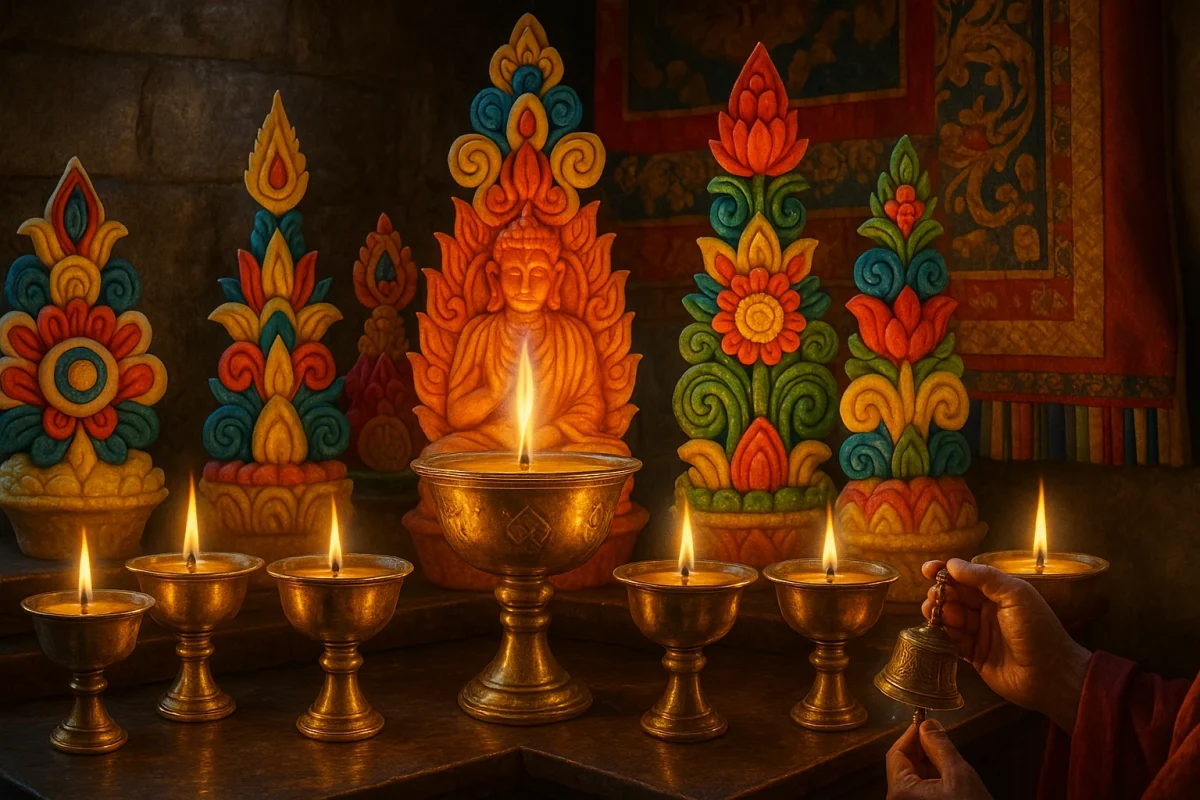
Making offerings is a fundamental ritual in Tibetan Buddhism, symbolizing devotion and the relinquishment of attachment to material possessions. Common offerings include butter lamps, which represent the light of wisdom dispelling ignorance, and torma, sculpted cakes made from barley flour and butter, often adorned with intricate patterns in vibrant colors like gold or red, symbolizing deities or wrathful protectors. Practitioners place these items before Buddha statues or sacred stupas, often accompanied by water, flowers, or incense, stored in ornate metal boxes, as a gesture of reverence. Monks in temples, such as those in central Tibet, perform these offerings daily, chanting mantras to bless the items and dedicate the merit to all sentient beings, a practice influenced by Indian Buddhism. This ritual fosters a generous spirit and purifies karma, aligning with the Bodhisattva path. The act of offering, as practiced in the Nyingma school, is believed to create prosperity and aid in overcoming suffering, making it a special practice for both monastics and laypeople, as pilgrims across Southeast Asia continue to perform it.
Performing Prostrations as a Devotional Practice
Prostration, a physical expression of devotion, is a common ritual in Tibetan Buddhism, performed to purify negative karma and cultivate humility. Practitioners prostrate before Buddha statues, stupas, or lamas, touching their forehead, throat, and heart with their hands to symbolize the purification of body, speech, and mind. This ritual, often accompanied by chanting mantras like “Om Mani Padme Hum,” is a powerful aid for spiritual development, as noted in historical accounts from July 2016. Monks and pilgrims at sacred sites, such as the Potala Palace, perform three prostrations to pay homage to the Buddha, seek refuge in the Dharma, and repent past wrongdoings. Laypeople may incorporate prostrations into their daily practice, using mala beads to count repetitions, typically in sets of 108, to accumulate merit. This practice, rooted in the Buddhist canon, deepens the practitioner’s connection to the path to enlightenment, fostering a disciplined and reverent mind, as taught by lamas across Central Asia.
The Vibrancy of Ritual Dance and Cham Ceremonies
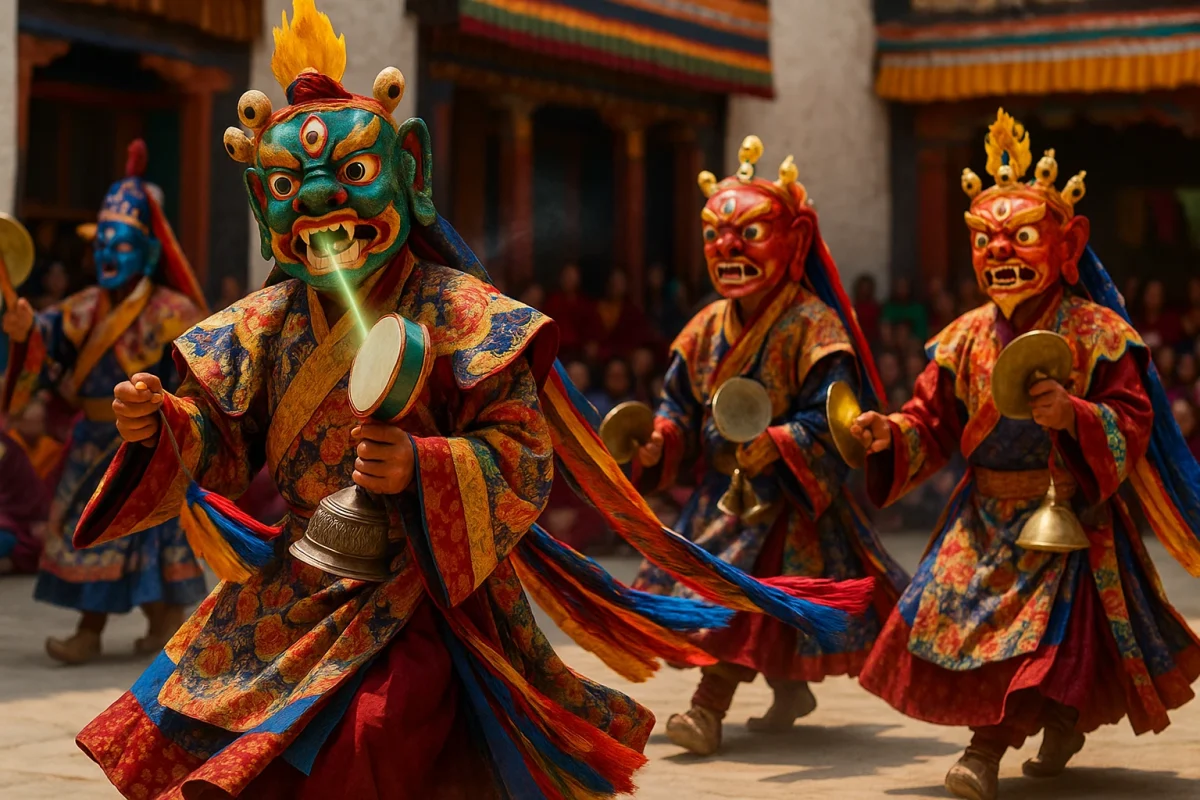
Ritual dance, known as Cham, is a vibrant ceremonial practice in Tibetan Buddhist Cham, performed by monks to purify negative karma and overcome evil spirits. These elaborate dances, often held during festivals like Losar or at sacred sites like the Jokhang Temple, feature colorful masks and costumes representing wrathful and peaceful deities, sometimes adorned with leather or metal patterns. Cham dances, rooted in the 8th century teachings of King Trisong Detsen’s guru, Padmasambhava, dramatize stories from Buddhist history, such as the life of Guru Rinpoche, and are accompanied by traditional musical instruments like the long horn, cymbals, and Tibetan drum, creating a resonant song. Performed in the courtyard of monasteries, Cham serves as a public ritual to bring blessings and spiritual purification, engaging both monks and laypeople. This tantric practice transforms the mind by embodying the deity’s qualities, fostering compassion and wisdom, and creating a powerful experience that resonates with Tibetan culture, as documented by the Oxford University Press (Oxford University Press: Tibetan Buddhism).
Sky Burial and Tibetan Funerary Practices
Tibetan Buddhist funerary practices, such as the Tibetan sky burial (Jhator), reflect the belief in impermanence and the cycle of rebirth, a core tenet of Mahayana Buddhism. In a sky funeral, the deceased’s body is prepared by a ritual master who chants ritual texts from the Bardo Thodol (Tibetan Book of the Dead) and offers the body to vultures at a mountain site, symbolizing the return to nature and liberation of the soul. This practice, common in Tibet’s rocky terrain where burial or cremation is challenging, is spiritually significant, as a fully consumed body signifies a sinless life, countering the poverty of death. Monks may also perform funeral rituals like lighting butter lamps or offering torma, sometimes placed in a ceremonial box, to guide the deceased through the intermediate state (bardo) to a favorable rebirth. These ceremonies, unique to Tibetan ritual practices, emphasize compassion for all human beings and the transient nature of life, aligning with Buddhist philosophy and practiced across East Asia.
The Power of Meditation and Deity Yoga
Meditation and deity yoga are central to Tibetan Buddhist rituals, designed to transform the mind and cultivate enlightenment. Practitioners engage in deity yoga, visualizing themselves as deities like Tara or Chenrezig to embody their qualities, a tantric practice rooted in the Nyingma and Gelug schools. This technique, often performed in monasteries, involves chanting secret mantras, using mala beads, and focusing on sacred objects like the vajra, a metal thunderbolt symbolizing indestructible truth, or the prayer bell. Visualization rituals, such as those in the Chöd practice, involve offering one’s body to overcome ego and attachment, purifying negative karma with a focus on the skull as a symbol of impermanence. Monks and laypeople, guided by lamas like the Dalai Lama, meditate daily, integrating these practices into ceremonies at temples or during public teachings. This meditative discipline, influenced by Chinese Buddhism, fosters a profound understanding of the nature of reality, making it an effective tool for spiritual awakening, as noted by the University of New York Press.
The Use of Sacred Ritual Items
Tibetan Buddhist rituals are enriched by an array of Tibetan ritual items, each with profound symbolic meaning. The prayer bell, often made of gold or brass, is held in the left hand to represent wisdom, while the vajra symbolizes the thunderbolt of enlightenment. The damaru, a small drum made of leather and wood, produces rhythmic sounds during tantric ceremonies, invoking deities. Conch shells, used as musical instruments or to hold holy water, signify the spread of the Dharma. Mala beads, crafted from rare stones or bodhi seeds, aid in mantra recitation, while torma offerings and butter lamps illuminate the temple, dispelling spiritual darkness. These items are used to perform rituals, purify obstacles, and create a sacred space, enhancing the practitioner’s connection to the Buddha’s teachings and fostering merit. The belief in these items’ power, rooted in traditional Tibetan practices, resonates across Buddhist traditions, supporting the path to enlightenment.
| Ritual Item | Symbolism | Use in Rituals |
|---|---|---|
| Prayer Wheel | Wheel of Dharma, compassion | Spinning for blessings, karma purification |
| Prayer Bell | Wisdom | Chanting, meditation, deity invocation |
| Vajra (Dorje) | Indestructible truth, enlightenment | Tantric rituals, meditation |
| Damaru Drum | Awakening, impermanence | Cham dances, tantric ceremonies |
| Mala Beads | Mindfulness, devotion | Mantra counting, meditation |
| Butter Lamp | Light of wisdom | Offerings, funerals, daily worship |
Walking the Path of Devotion and Light
Tibetan Buddhist rituals, from spinning prayer wheels to chanting mantras, making offerings, performing prostrations, dancing Cham, and conducting sky burials, offer a vibrant tapestry of practices that purify karma, cultivate wisdom, and foster compassion. Rooted in the teachings of the Buddha and enriched by centuries of tradition in Tibet, these ceremonies connect practitioners to the spiritual essence of Vajrayana Buddhism, transforming the mind and aligning with the path to enlightenment. Whether you’re drawn to the meditative power of mantra recitation or the symbolic act of spinning a prayer wheel, these rituals provide profound ways to engage with Tibetan culture and Buddhist philosophy. To deepen your spiritual practice with a powerful mantra often paired with sound healing, explore our insightful guide, What Does Om Mani Padme Hum Mean? A Deep Dive into the Sacred Mantra to uncover the profound meaning and transformative potential of this sacred chant.