


Hand-crafted
Amethyst Crystal Tower
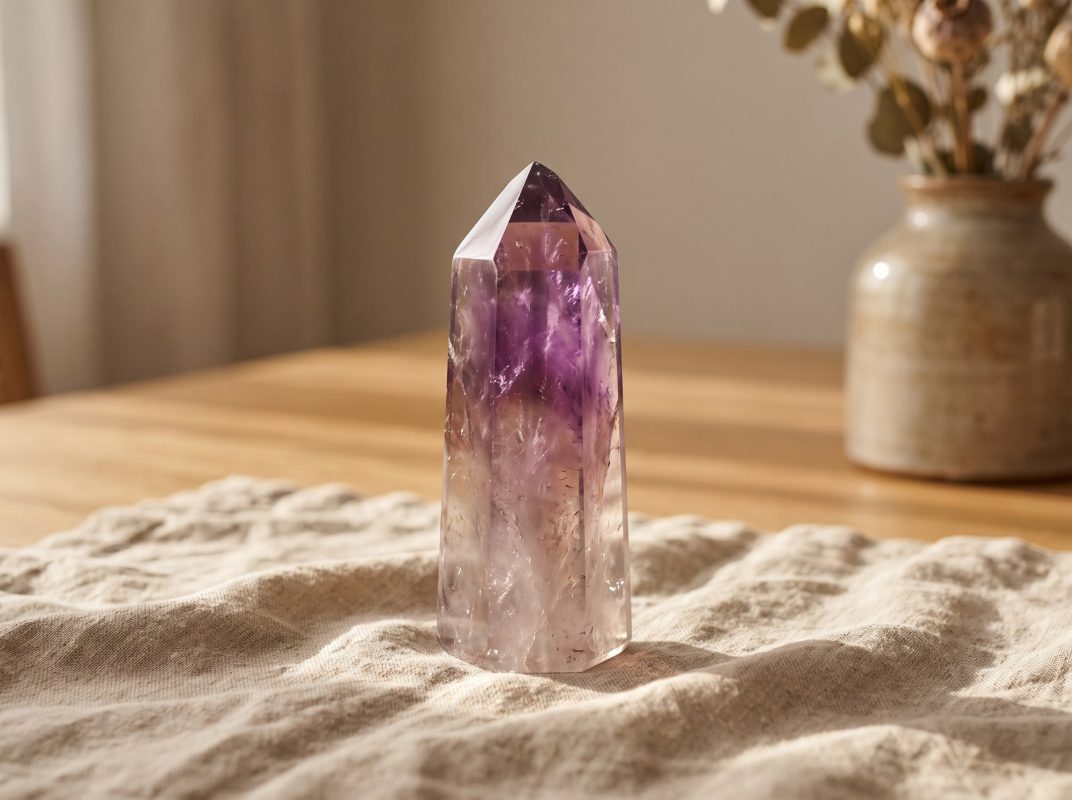
A semi-polished amethyst point, the purple deepening towards the tip.
- Natural amethyst, undyed
- Zones pale to deep within one point
- Even colour throughout would mean glass
- Direct sun fades amethyst permanently
$14.90
Estimated delivery:
Free shipping on US orders over $180 · 30-day returns
Light, but not full sun
The faces take the light one at a time, so a point on a shelf changes through the day. Keep it out of direct sun though: amethyst and rose quartz both fade.
Named, treatment and all
Undyed is written undyed. Where the colour comes from a metal coating, the page says so, because that is the part nobody else tells you.
No two points alike
Banding, colour zoning, a tip a degree off centre. That unevenness is what tells you it is stone and not resin, and it is why yours is yours.
Frequently asked questions
Is amethyst naturally purple?
Yes - the colour comes from iron traces and irradiation over geological time. Depth of colour varies from pale lilac to deep violet, often within a single piece.
Will it fade in sunlight?
Yes, and this is the one real precaution with amethyst: prolonged direct sun turns it grey or brownish, permanently. Keep it out of a south-facing window.
How can I tell natural amethyst from glass?
Natural stone is rarely uniform - look for colour zoning and small internal veils. Perfect, even colour throughout is a signal worth questioning.
What is amethyst traditionally associated with?
Calm and clarity, in the crystal literature. That is an association we report, not an effect we claim.
Cut from rough, not grown
A tower starts as a block of rough stone. It is sawn to a rough shape, ground to its faces, then polished by hand through finer and finer grits. The faces are never perfectly equal and the point is rarely perfectly centred - that unevenness is what tells you it is stone and not resin.
What the colour is telling you
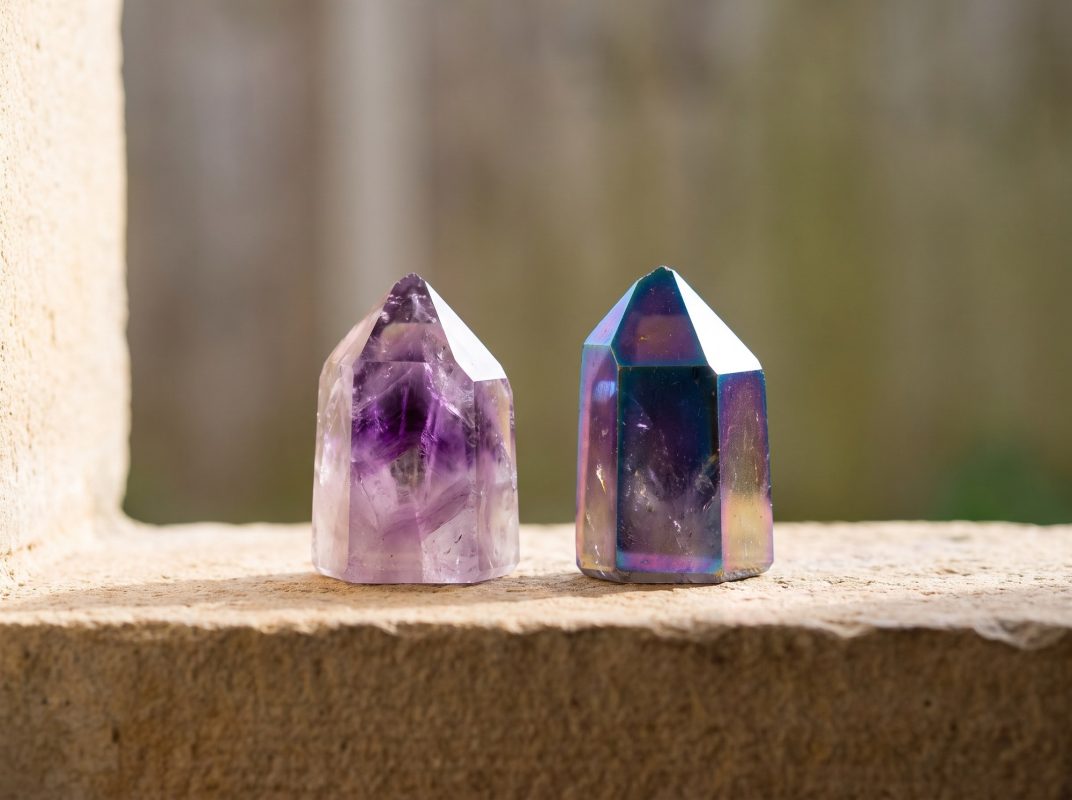
Some of these stones are exactly what they look like. Others are quartz with a metal coating applied under heat, which is where the iridescent blues and violets come from. Neither is a lesser stone, but only one of them is a natural colour, and we say which is which on every listing.
Related products
-

Blue Apatite Tower
4"
Price range: $9.90 through $14.90Select options This product has multiple variants. The options may be chosen on the product page -

Yooperlite Tower
Hand-crafted · 4"
$14.90 -

Rainbow Moonstone Tower
4"
Price range: $18.90 through $29.90Select options This product has multiple variants. The options may be chosen on the product page -
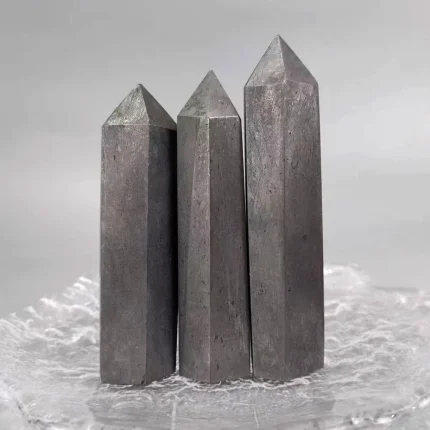
Shungite Tower
Hand-carved · 1.6"
$22.90
