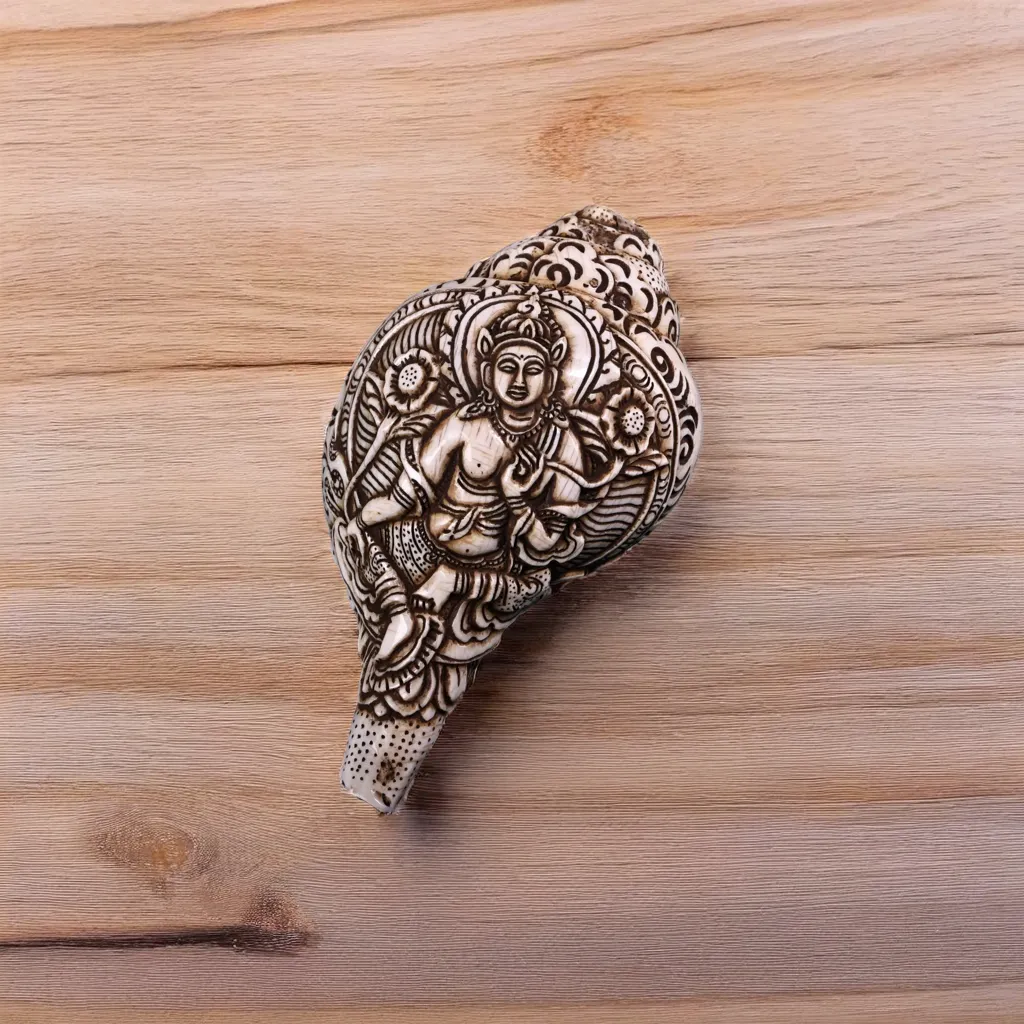
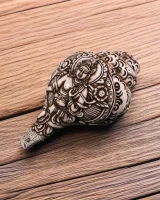
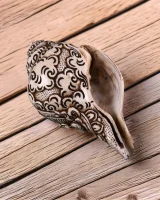
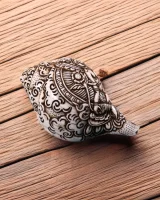
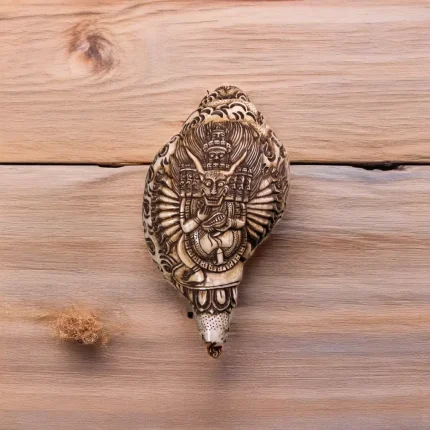
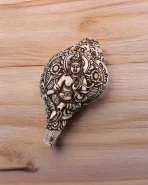
Worked in gold and silver tones
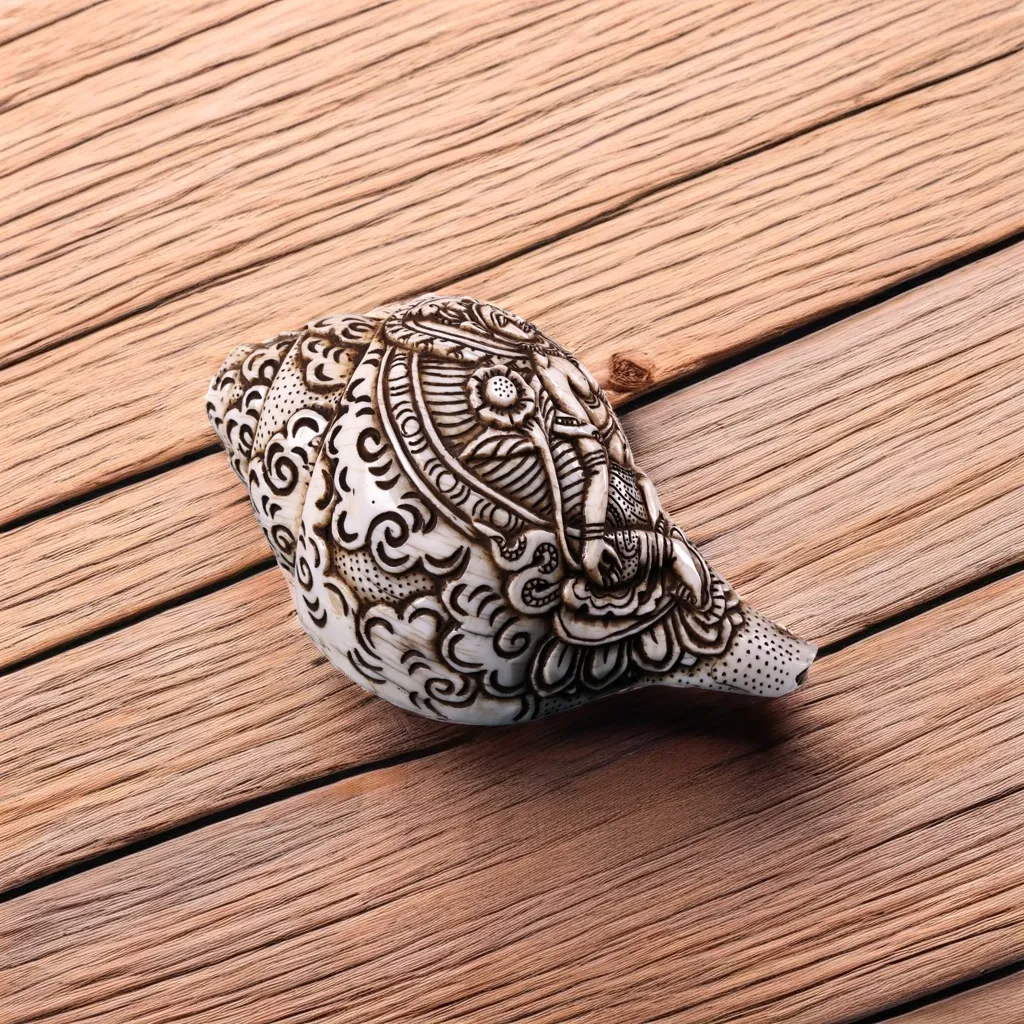
The mounting wraps the shell where it is held, and carries its own carved detail. Two metals on one piece is more work than one, and it shows in the edges.
Shakyamuni, the historical Buddha
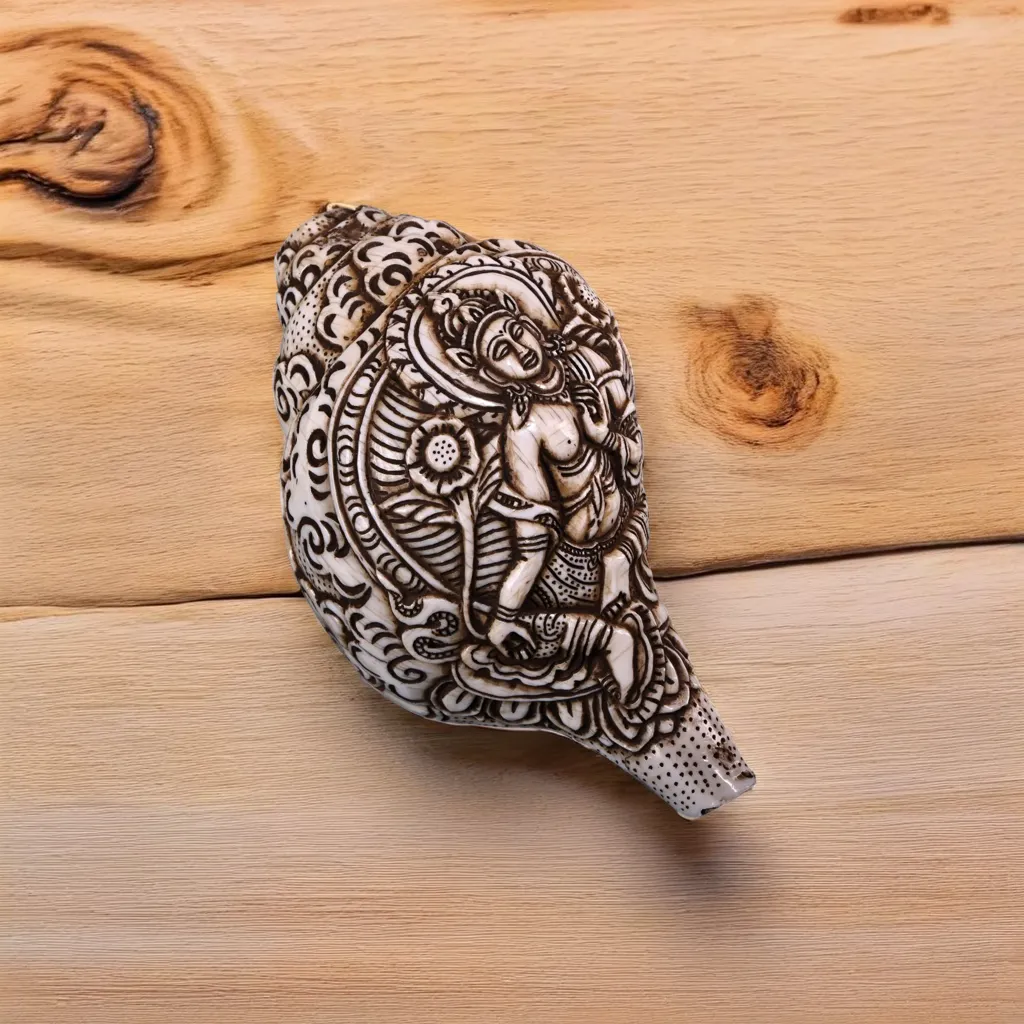
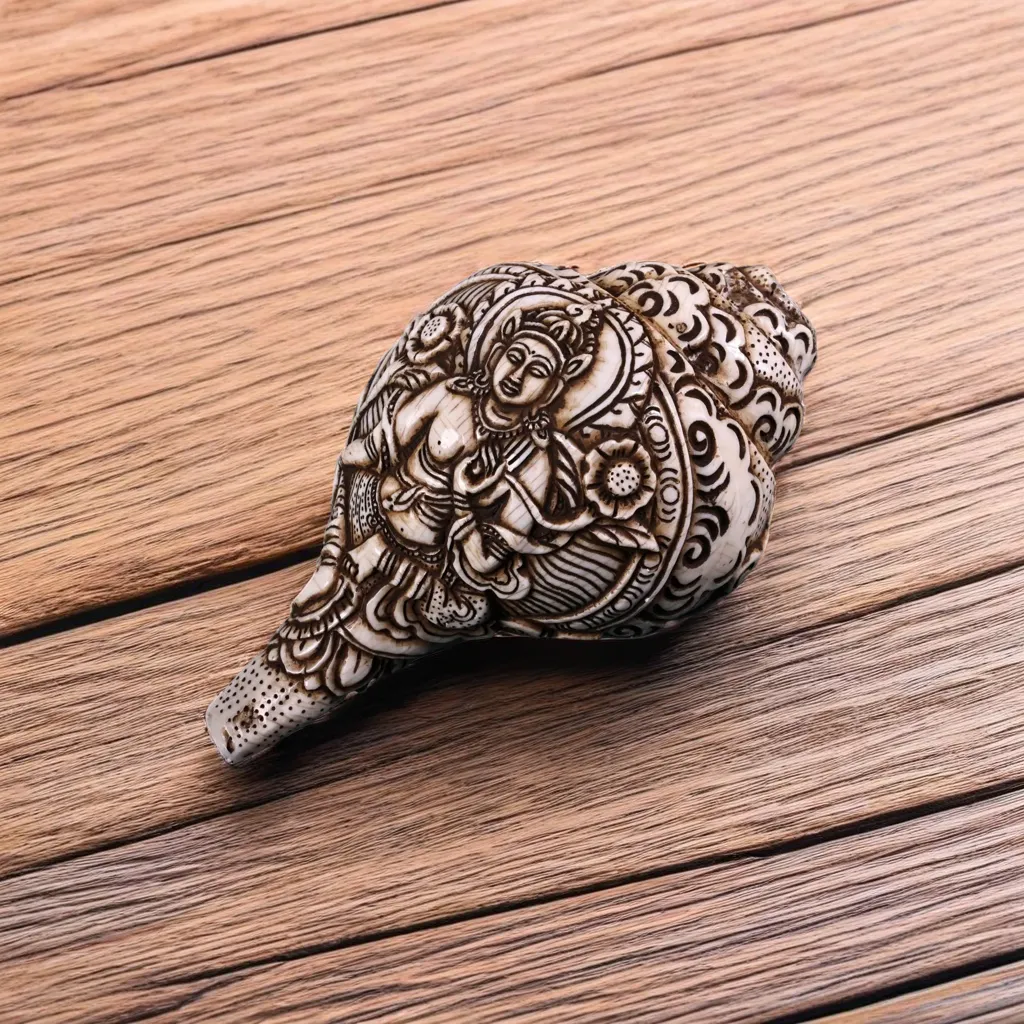
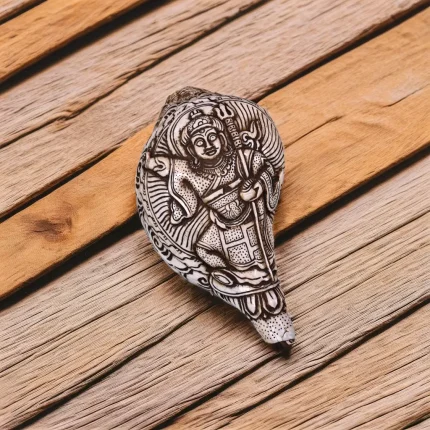
The figure worked here is Siddhartha Gautama, who taught in northern India around the fifth century BCE. The name means sage of the Shakya clan.
Held in two hands
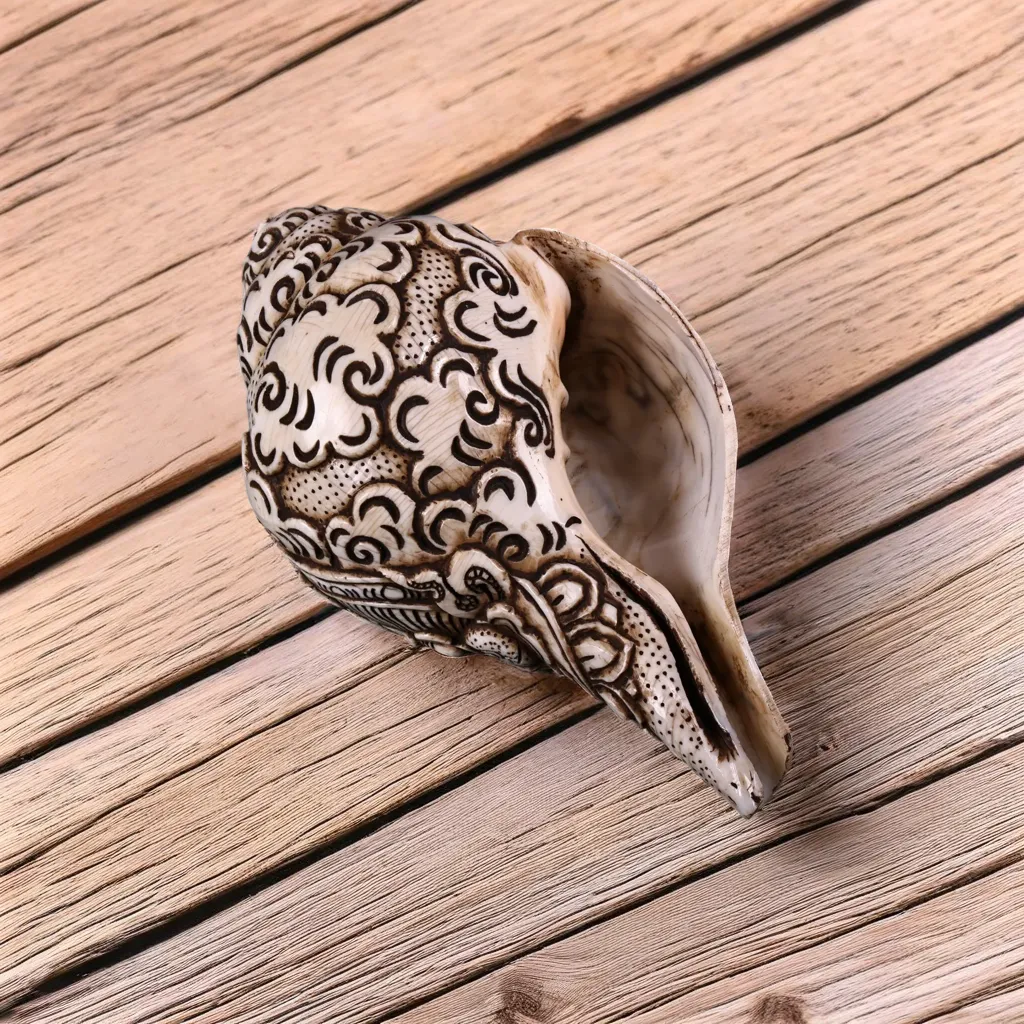
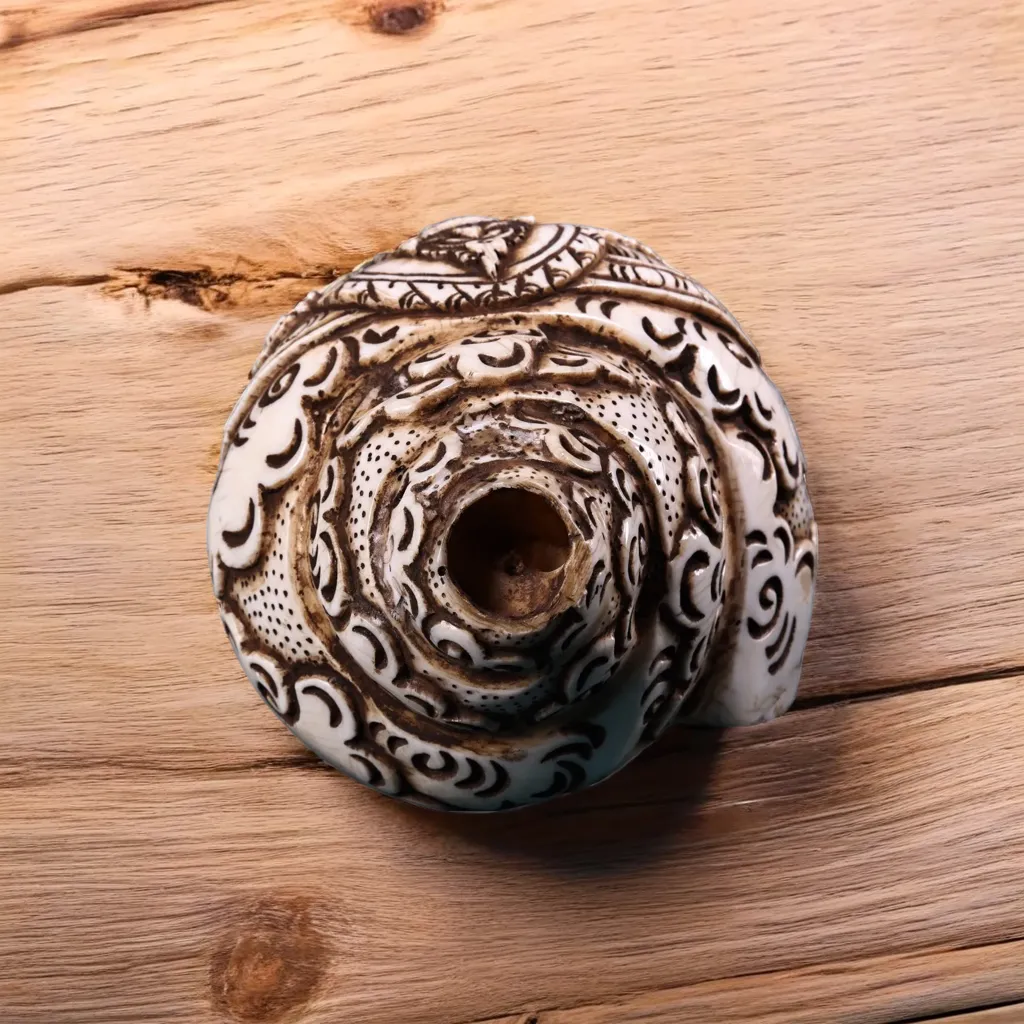
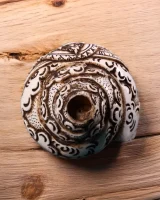
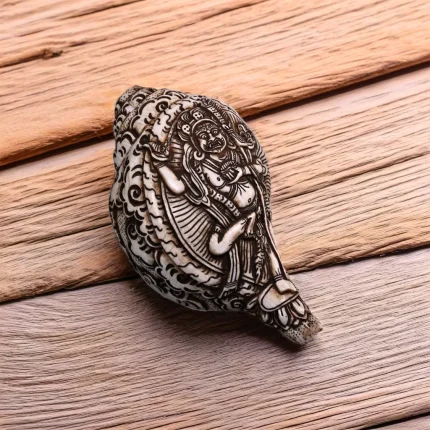
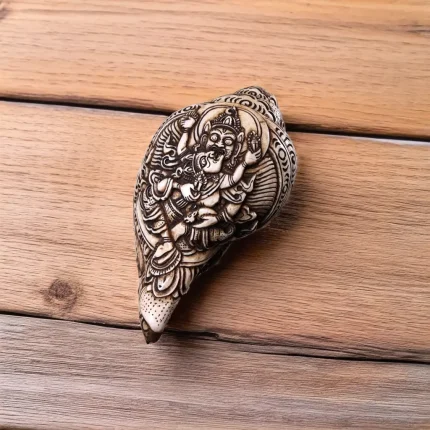
A shell of this size is sounded with both hands rather than one. Kept rather than played, it sits on its own curve without a mount.
Deepen your spiritual practice with this divine Shakyamuni Buddha Conch Shell, a handmade masterpiece of Tibetan Buddhist art that resonates with the deep resonant voice of the Dharma, a unique offer for spiritual seekers. Carved from a natural white conch shell (Turbinella pyrum), a sacred shell, by artisans in Nepal and Tibet, this 8-inch long ritual item, known as the Shakyamuni Buddha Carved, features an image of Shakyamuni Buddha, the spiritual leader, with a conch-like swirl on his head, believed to represent the swirl of his navel or hair whorls on Buddha, holding a lotus flower in his left hand to symbolize purity.
Adorned with fine gold, silver, and a red gem, with accents of green coral, this antique conch shell, used as a logo in some traditions, produces a sacred sound as a musical instrument, believed to banish evil spirits, avert natural disasters, and scare negative energies, making it perfect for sound healing, meditation, or sacred rituals in Tibetan Buddhism. As an emblem of power, authority, and sovereignty, this Shakyamuni Buddha Conch Shell, with its spiraling form in a clockwise direction mirroring the sun, moon, and stars, embodies the voice of the Buddha, reflecting the ancient Indian traditions of Buddhist monks and the symbol of the proclamation of the Dharma, often linked to Chenrezig in thangka painting.
This Shakyamuni Buddha Conch Shell, a symbol of authority and a conch shell with Shakyamuni, connects you to the rich history of Tibetan Buddhist practices, where the conch shell, or Sankha, is used as an original horn-trumpet to hold the power, authority, and sovereignty, as seen in Hinduism, Jainism, and Vaishnavism with God Vishnu, who is known to hold a conch.
Part of our Buddhist symbols collection. We ship within the United States only, and returns are accepted within 30 days of delivery, on the terms set out in our Returns & Refunds policy. For those concerned about ethical sourcing, rest assured: it’s sustainably harvested from Nepal and Tibet, ensuring cultural respect and environmental care, its condition declared pristine as if it were a treasure from a palace. The price reflects its handmade quality, with the shell in perfect shape and size, making it a unique addition to your sacred space, statue collection, or alongside a Buddha statue on a stand.
Use it in your sound healing sessions or display it as a symbol of fortune, and let its hand-carved design, with a spiral to the right, bring the blessings of Shakyamuni to your life, banishing evil spirits, averting natural disasters, and scaring negative energies. Order now to explore the transformative energy of this Shakyamuni Buddha Conch Shell online today, a seller’s commitment to spiritual authenticity.
What Does the Conch Shell Symbolize in Buddhism?
In Buddhism, the conch shell is an auspicious symbol representing the sound of the Dharma, believed to awaken people to the teachings of the Buddha over time, an emblem of power, authority, and sovereignty. This Shakyamuni Buddha Conch Shell, a handmade antique from Nepal, embodies this meaning with a shell with Shakyamuni Buddha, featuring a conch-like swirl on his head, believed to represent the swirl of his navel and linked to Gautama Buddha. The sacred shell symbolizes the propagation of the Dharma, its blast believed to banish evil spirits, avert natural disasters, and scare negative energies, reflecting its spiraling direction like the sun, moon, and stars. Used as a musical instrument in Buddhist rituals, its deep sound enhances meditation and sound healing, making it a perfect addition to your collection, reflecting the traditions of Tibetan Buddhism and Hinduism, Jainism’s shared reverence for the Sankha.
What Is the Significance of the Conch Shell?
The conch shell holds deep significance in Buddhism, Hinduism, and Jainism as a Sankha, symbolizing the wheel of Dharma and the motion of the sun, moon, and stars with its spiraling form in a clockwise direction. This Shakyamuni Buddha Conch Shell, a hand-carved piece from Nepal and Tibet, is considered especially sacred, with the Shakyamuni Buddha Carved image reflecting his teachings, often linked to Chenrezig. Its blast is believed to banish evil spirits, avert natural disasters, and scare away negativity, representing the emblem of power, authority, and sovereignty. Used in sacred rituals by Buddhist monks, this Tibetan Buddhist conch shell enhances spiritual practice, making it a meaningful addition to your collection on a stand, symbolizing the voice of the Buddha and the symbol of the proclamation of the Dharma, a treasure as enduring as an original palace artifact.
What Are the Benefits of Wearing a Conch Shell?
Wearing a conch shell, like this Shakyamuni Buddha Conch Shell, is believed to bring spiritual benefits in Tibetan Buddhist and Hinduism Shankha traditions, offering protection and fortune for both male and female practitioners across time. Its symbolic power, authority, and sovereignty, as an emblem of Gautama Buddha, can banish evil spirits, avert natural disasters, and scare negative energies with its sacred sound. The white conch shell, with its spiral to the right and green gem accents, is often worn as an antique artifact to connect with the sound of the Dharma, providing a sense of peace during meditation. The Shakyamuni Buddha is carved by hand, so the depth of the relief and the finish differ from one shell to the next.
Which Hindu God Holds a Conch Shell?
In Hinduism, the conch shell, or Sankha, is famously held by Lord Vishnu, a deity symbolizing preservation and protection in Vaishnavism, often depicted with a conch in his left hand, as seen in mythical epics. This Shakyamuni Buddha Conch Shell, while rooted in Tibetan Buddhist tradition, reflects the shared symbolism of the Hinduism Shankha, as Shakyamuni Buddha also embodies wisdom and compassion, linked to Gautama Buddha. Carved with Gautama Buddha holding a lotus flower in his left hand, this conch shell from Nepal and Tibet connects to the broader spiritual history of the region, making it a meaningful ritual object for your collection, inviting the sacred sound of the Dharma into your practice at an affordable cost, with shipment details left by buyer and a return period to ensure satisfaction.