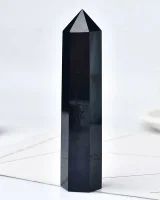
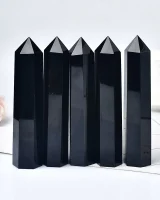
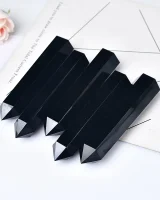
Obsidian Tower
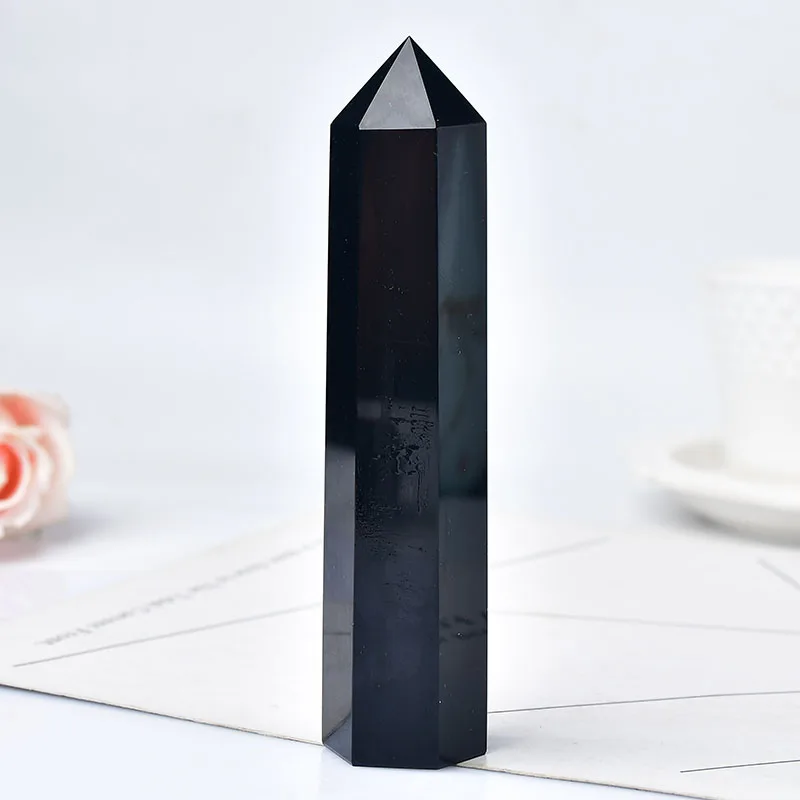
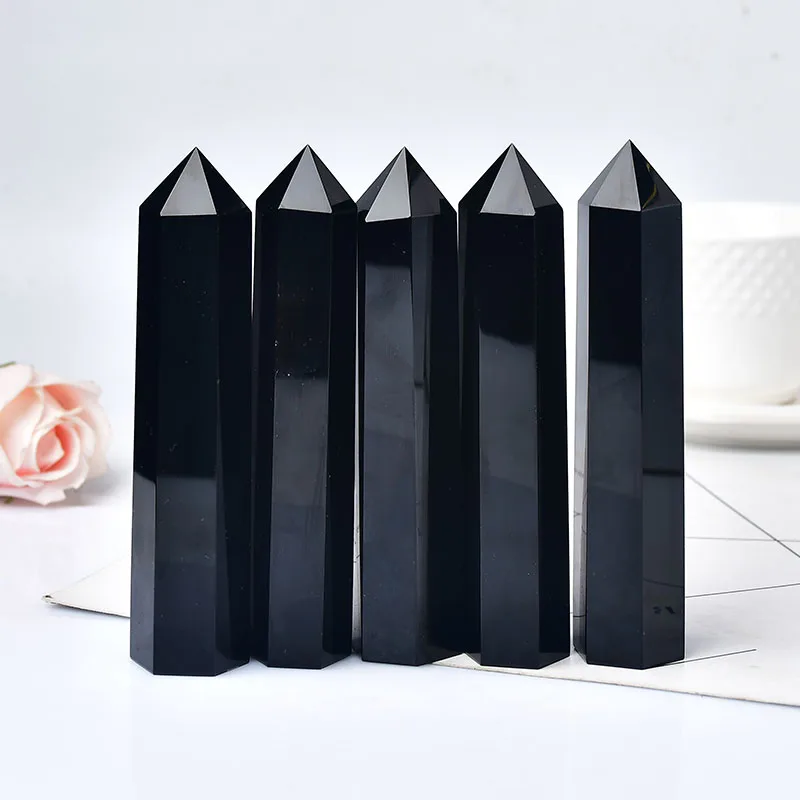
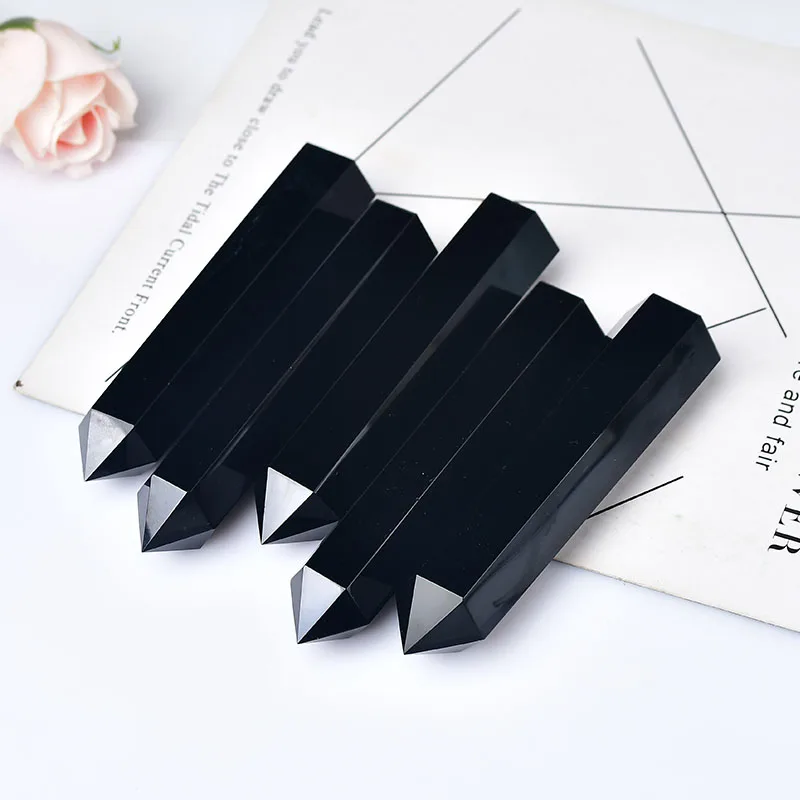
A polished obsidian point: volcanic glass, opaque black with a mirror surface.
- Volcanic glass, natural and untreated
- Bubbles are the cooling, not cutting flaws
- Takes a mirror polish no rock will hold
- Handle it as glass: it chips at the tip
$18.90
Estimated delivery:
Free shipping on US orders over $180 · 30-day returns
Light, but not full sun
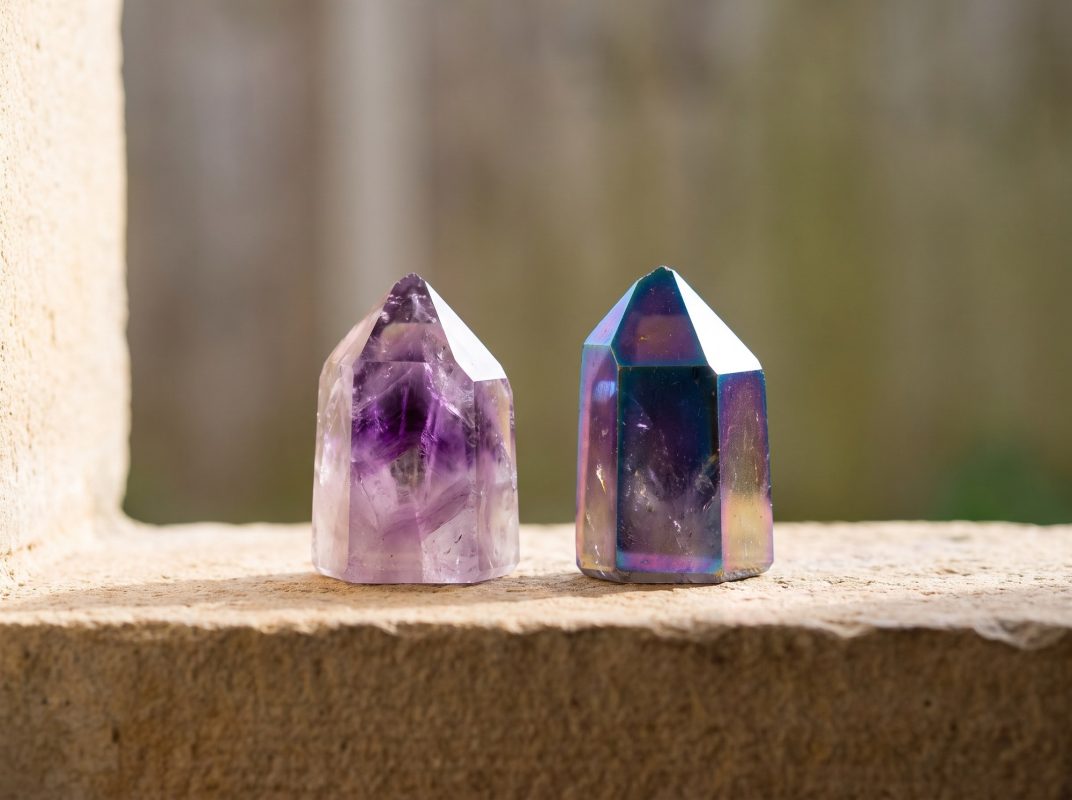
The faces take the light one at a time, so a point on a shelf changes through the day. Keep it out of direct sun though: amethyst and rose quartz both fade.
Named, treatment and all
Undyed is written undyed. Where the colour comes from a metal coating, the page says so, because that is the part nobody else tells you.
No two points alike
Banding, colour zoning, a tip a degree off centre. That unevenness is what tells you it is stone and not resin, and it is why yours is yours.
Frequently asked questions
What is obsidian?
Volcanic glass - lava cooled too quickly to form crystals. That is why it breaks with a curved, glassy fracture and takes a mirror polish that no ordinary rock will.
Is obsidian fragile?
It is hard but brittle, and a polished point will chip if knocked against a hard edge. Handle it as you would glass, because in mineral terms that is what it is.
Why does mine have small bubbles or a dull patch?
Gas bubbles trapped in the cooling lava, and areas where the glass is less uniform. Both are ordinary features of the material rather than faults in the cutting.
How should it be cleaned?
A damp cloth, then dry. The polish is on the surface; abrasives will scratch it.
Cut from rough, not grown
A tower starts as a block of rough stone. It is sawn to a rough shape, ground to its faces, then polished by hand through finer and finer grits. The faces are never perfectly equal and the point is rarely perfectly centred - that unevenness is what tells you it is stone and not resin.
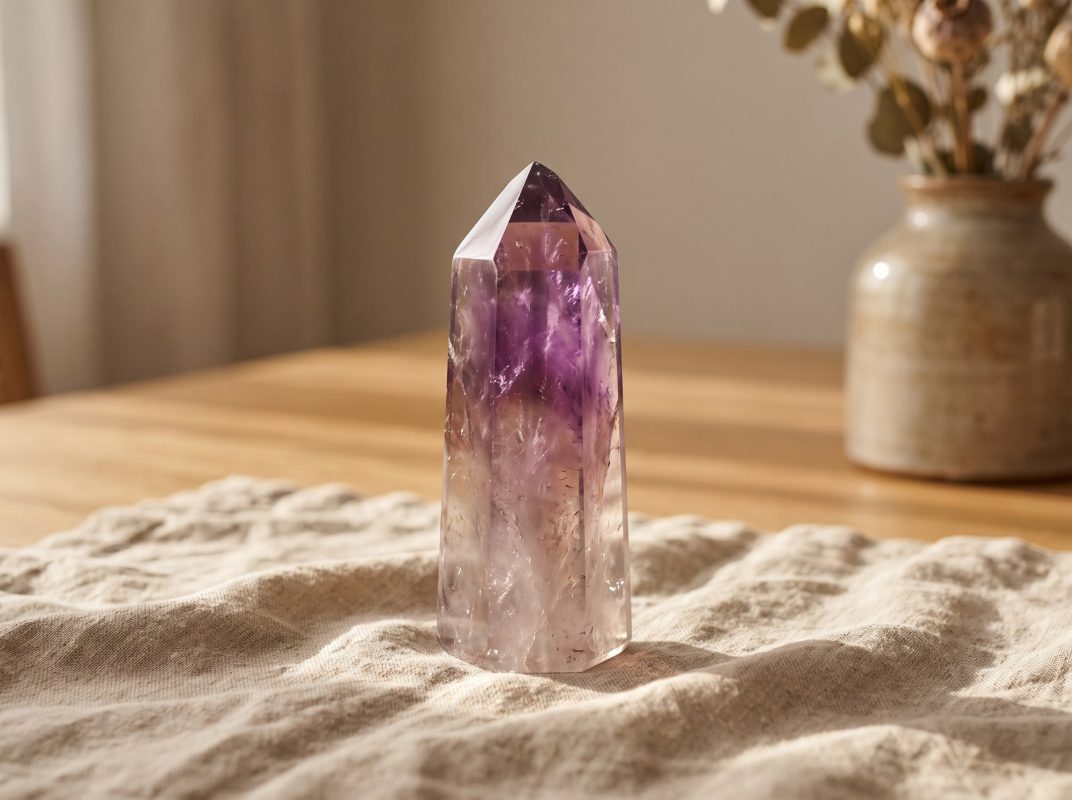
What the colour is telling you
Some of these stones are exactly what they look like. Others are quartz with a metal coating applied under heat, which is where the iridescent blues and violets come from. Neither is a lesser stone, but only one of them is a natural colour, and we say which is which on every listing.
Related products
-
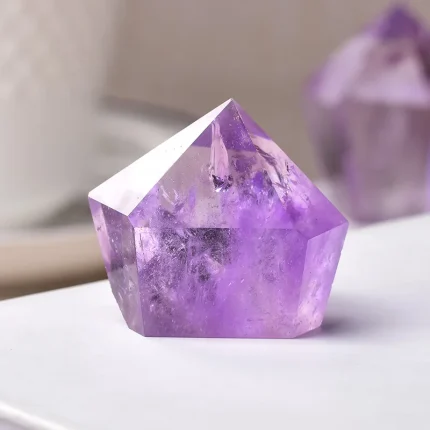
Amethyst Crystal Tower
Hand-crafted · 4"
$14.90 -

Labradorite Tower
4"
Price range: $14.90 through $29.90Select options This product has multiple variants. The options may be chosen on the product page -

Yooperlite Tower
Hand-crafted · 4"
$14.90 -

Angel Aura Quartz Tower
4"
Price range: $12.90 through $19.90Select options This product has multiple variants. The options may be chosen on the product page